
The wealthiest neighborhoods in Los Angeles were not built by Hollywood premieres, tech exits, or modern celebrity culture. Southern California’s original fortunes came from oil fields, railroads, banking, retail, and industry. Those fortunes created estates, planned communities, cultural institutions, and architectural standards that still shape the market today.
That is what separates genuine old-money enclaves from simply expensive postcodes. The wealthiest neighborhoods in Los Angeles tend to have limited supply, extraordinary schools, deep civic investment, mature landscaping, and rules designed to preserve their character for generations.
These four areas each tell a different chapter of that story. We start in the foothills northeast of Downtown, move through central Los Angeles, return to the San Gabriel Valley, and finish on the Palos Verdes Peninsula.
Table of Contents
- Where Old Money Lives in Los Angeles
- Neighborhood #1: Pasadena & Millionaires Row
- Neighborhood #2: Hancock Park, Los Angeles
- Neighborhood #3: San Marino
- Neighborhood #4: Palos Verdes Estates
- What Makes the Wealthiest Neighborhoods in Los Angeles Different?
- FAQs About the Wealthiest Neighborhoods in Los Angeles
Where Old Money Lives in Los Angeles
Los Angeles became a serious destination for wealth earlier than many people realise. When the Santa Fe Railroad created a direct Chicago to Los Angeles route in the late 1880s, wealthy Midwestern families could escape brutal winters and establish California estates without undertaking an enormous journey.
At roughly the same time, the region’s oil boom transformed Los Angeles. By the mid 1920s, the Los Angeles Basin had become the world’s largest oil exporting region. Oil fortunes were immediate, and a remarkable amount of that money went directly into residential construction.
Banking families, industrial heirs, and retail magnates followed. They did not merely purchase large homes. They chose places where land, planning, schools, gardens, clubs, and institutions could reinforce the value of their investment over decades.
That is why the wealthiest neighborhoods in Los Angeles still look and feel different. Their price tags are only part of the story. The real value lies in structural advantages that are difficult to reproduce elsewhere: restricted inventory, preservation controls, established school districts, and community standards that have survived for more than a century.
DISCOVER THE BEST PLACES TO LIVE IN SOUTHERN CALIFORNIA
Neighborhood #1: Pasadena & Millionaires Row
Pasadena and Millionaires Row
Pasadena was Greater Los Angeles’ first great wealth corridor. About 11 miles northeast of the city, South Orange Grove Boulevard became known as Millionaires Row within a decade of Pasadena’s incorporation in 1886.
The appeal was simple. Pasadena offered foothill elevation, clean air, mountain views, and a comfortable distance from the industrial activity closer to the city centre. Wealthy families arriving from the Midwest found the climate and setting completely different from the Northeast.
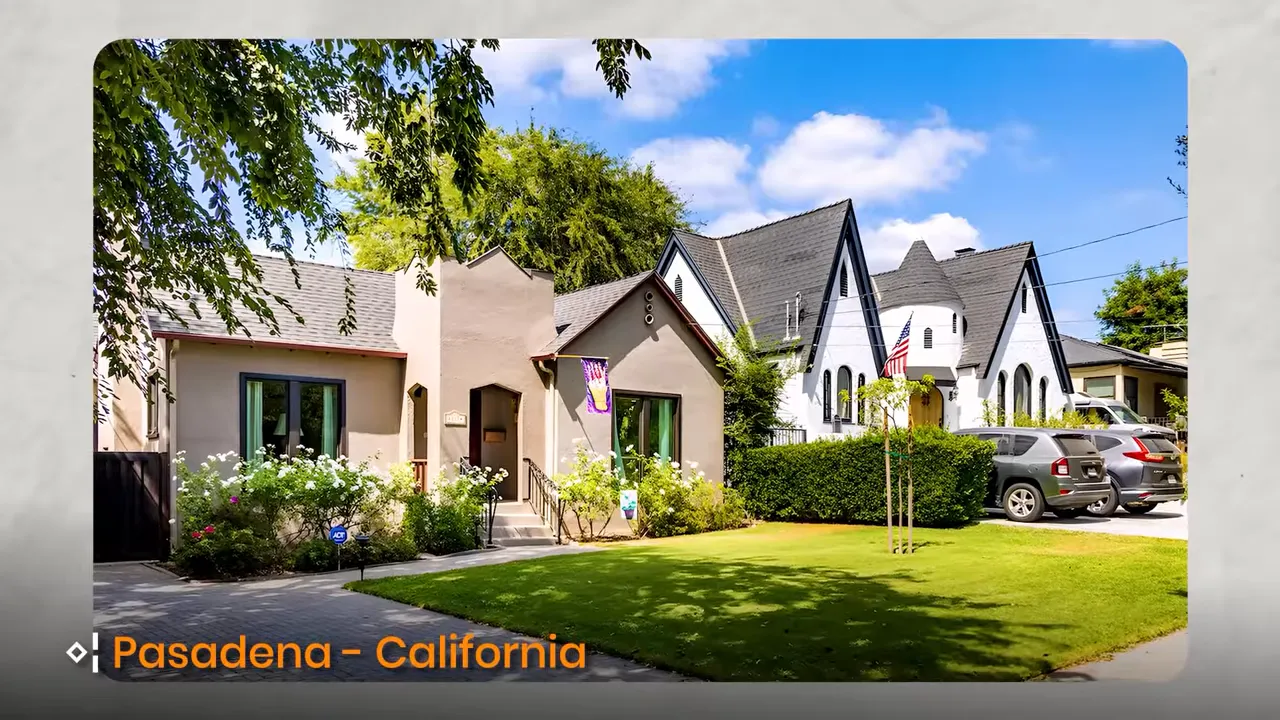
They built Victorian, Colonial Revival, Craftsman, and Mediterranean Revival residences on a scale that made the street famous nationwide. William Wrigley Jr. built here. David B. Gamble commissioned the Gamble House, one of America’s best known Craftsman homes. Adolphus Busch also established an estate in Pasadena.
The Wrigley Mansion, completed in 1914, remains one of the great surviving landmarks and now serves as the Rose Parade headquarters. It is properly grand and well worth appreciating in person.
We should be honest, though. Millionaires Row is not a perfectly preserved historic corridor. Interstate construction, redevelopment, and changing land uses led to the demolition of many original mansions. What remains is a mix of surviving period homes and later development.
That does not make Pasadena any less compelling. It remains one of the wealthiest neighborhoods in Los Angeles for buyers who value history, culture, and a genuinely leafy lifestyle. The Rose Bowl, Norton Simon Museum, Pasadena Playhouse, and Caltech give the city tremendous institutional depth.
Market-wise, Pasadena’s median home price was cited at roughly $1.3 million, although a particularly beautiful home commonly requires closer to $2 million. Homes can move quickly, often attracting multiple offers. It is also worth factoring in the drive from the South Bay, which can be about an hour, or closer to 45 minutes in clear traffic.
Best fit: Buyers who want an academic, historic, culturally rich environment and do not need to be close to the coast every day.
Neighborhood #2: Hancock Park, Los Angeles
Hancock Park
Hancock Park is one of the wealthiest neighborhoods in Los Angeles, but it is not about ocean views, canyon roads, or dramatic hillsides. Its luxury is quieter and more disciplined. The neighborhood is defined by wide streets, mature trees, significant setbacks, and an unusually consistent collection of period architecture.
This community was built from oil money. The Hancock family had drilled on the former Rancho La Brea for decades, and in 1921 G. Allan Hancock began subdividing the land into a carefully planned residential enclave.
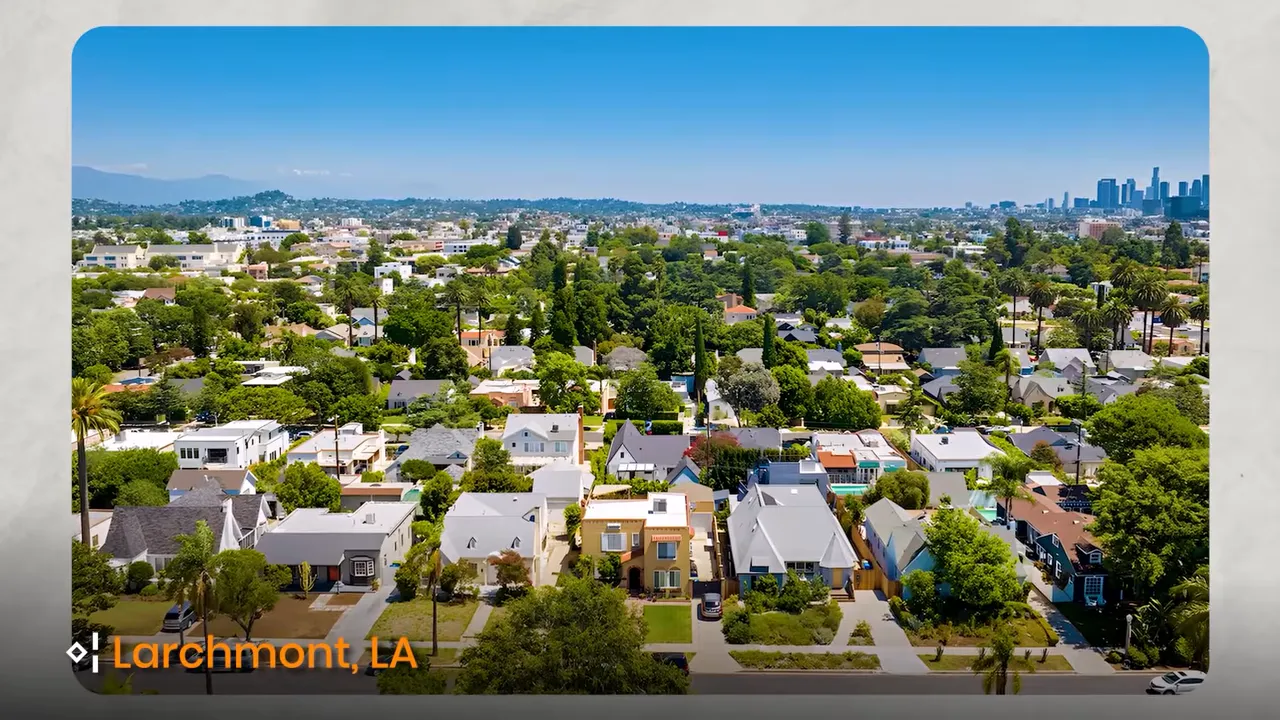
The original planning standards were unusually specific:
- Homes had to sit at least 50 feet back from the street.
- Utility lines were placed underground at the rear of properties.
- Hancock leased 105 acres to the Wilshire Country Club, creating a lasting green edge for the community.
The result is a neighborhood of substantial two-storey residences in Tudor Revival, English Revival, Spanish Colonial Revival, Mediterranean Revival, Monterey Revival, and American Colonial Revival styles.
Hancock Park received Historic Preservation Overlay Zone status in 2008. This matters. Exterior alterations, additions, new construction, and landscaping changes are subject to review under the preservation plan. That can add time, expense, and responsibility to ownership, but it is exactly why the neighborhood has retained such a coherent character.
Put plainly, buying here is not just buying a home. It is buying preservation.
Over the decades, Hancock Park attracted names such as Howard Hughes, Mae West, Nat King Cole, and department store magnate Arthur Letts Jr. Today, it remains one of the wealthiest neighborhoods in Los Angeles for people who want architectural gravitas in a central location.
The 12 month trailing median sale price was around $2.2 million, although a really good house generally starts above $2.5 million. Downtown is roughly 20 minutes away, Museum Row is easy to reach, and Larchmont Village provides a genuinely walkable commercial strip right on the edge of the neighborhood.
Best fit: Buyers who want central Los Angeles convenience, historic architecture, and legally protected streetscapes, while accepting the realities of maintaining an older home.
Neighborhood #3: San Marino
San Marino
San Marino is deliberately understated. With roughly 13,000 residents, it sits on a plateau between Pasadena and Alhambra. From outside, it can look quiet and almost ordinary. Once inside, it becomes very clear why it is among the wealthiest neighborhoods in Los Angeles.
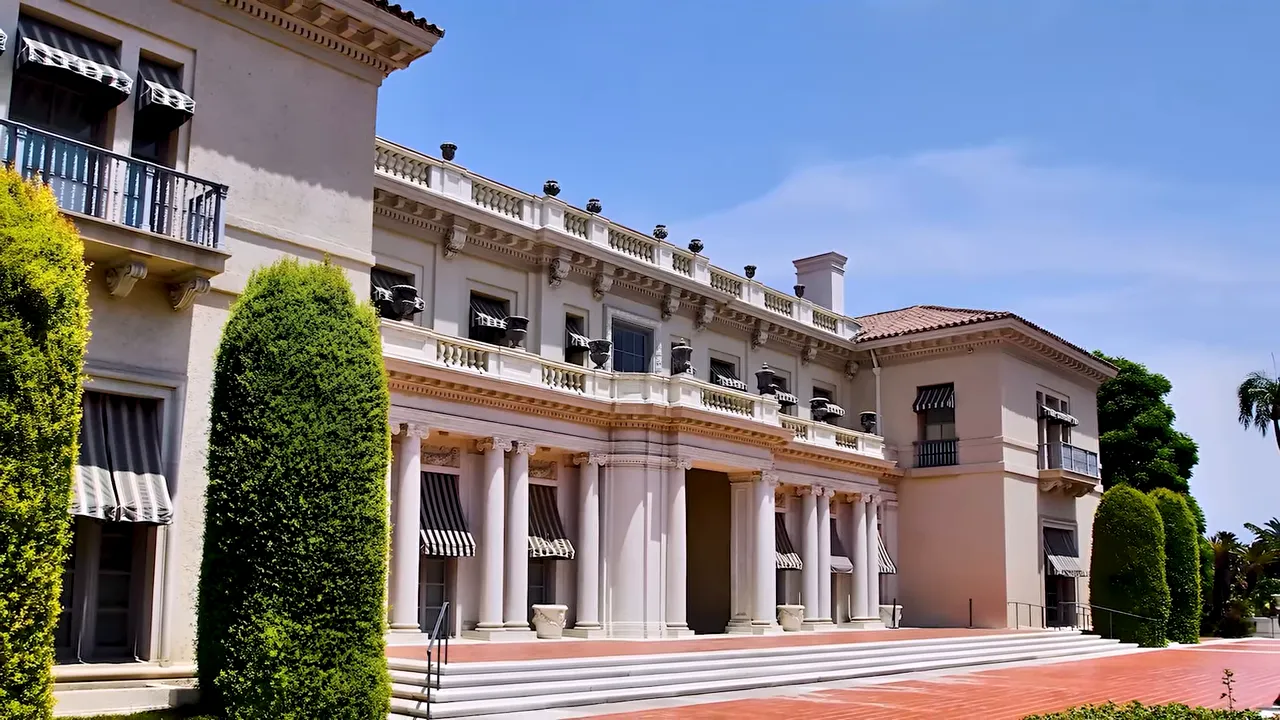
San Marino exists because of Henry E. Huntington, nephew and heir of railroad tycoon Collis P. Huntington. Henry Huntington bought the San Marino Ranch in 1903 and helped incorporate San Marino as a city in 1913.
His intention was explicit: a city of estates, entirely residential. No commercial zoning. No apartment buildings. No condos. Just homes, gardens, wide streets, and parks. More than a century later, that core formula remains intact.
There are about 4,600 homes in the whole city, with almost no condos or townhomes. Most properties were built between 1920 and 1950. Smaller lots begin around 4,500 square feet, while many larger estate properties sit on lots exceeding 30,000 square feet.
The Huntington Library, Art Museum, and Botanical Gardens sit on the grounds of Huntington’s original estate. Opened to the public in 1919, the institution spans 130 acres and includes 16 themed botanical garden collections. It has an endowment exceeding $700 million, which tells you something about the cultural depth embedded in this small residential city.
For San Marino residents, weekday admission to the Huntington is free. It is a proper perk, not a marketing gimmick.
Pricing is significant. Average homes were cited around $3 million, while a real estate-calibre property usually requires closer to $4 million. Entry for a smaller renovated home begins around $2.2 million, while large-lot estate properties can exceed $8 million.
San Marino’s strength is consistency. Inventory is scarce, and demand is reinforced by school access. The city’s four public schools average a 10 out of 10 rating, while Huntington Middle School was cited as ranking 17th among 2,777 California middle schools.
That combination helps explain why San Marino behaves differently from much of the wider county. It is among the wealthiest neighborhoods in Los Angeles because buyers are purchasing a whole framework: school access, cultural amenities, estate-scale residential land, and remarkable consistency.
Best fit: Families whose priorities are school quality, quiet residential streets, and a long-term estate environment over nightlife or a short commute to the coast.
Neighborhood #4: Palos Verdes Estates
Palos Verdes Estates
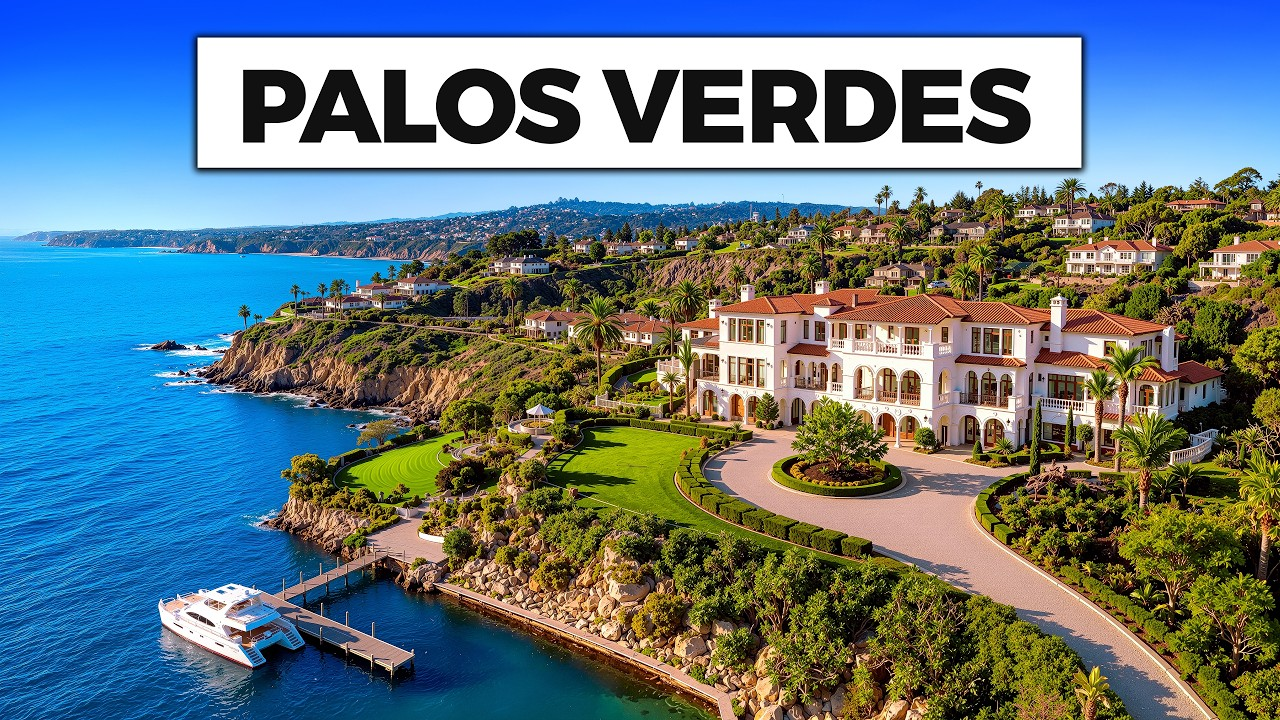
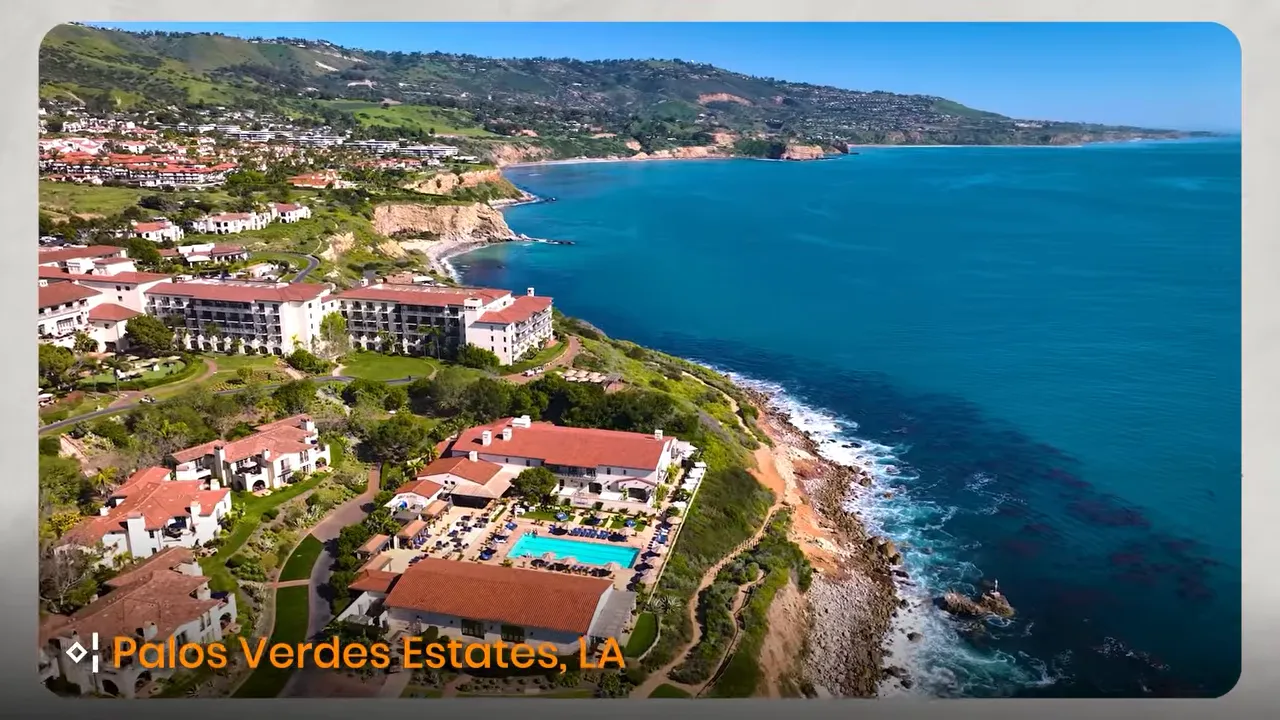
Palos Verdes Estates is the crown jewel for many people considering the wealthiest neighborhoods in Los Angeles. It sits on the Palos Verdes Peninsula, alongside Rancho Palos Verdes and Rolling Hills Estates, just south of Manhattan Beach and Redondo Beach, combining old-money prestige with dramatic ocean views, hiking access, and a residential environment that has been fiercely protected.
In 1923, New York banker Frank Vanderlip set out to create what he described as the nation’s most fashionable and exclusive residential colony. His group acquired the 16,000 acre Rancho de los Palos Verdes, and he brought in Frederick Law Olmsted Jr. to shape the community.
Olmsted’s approach was exceptional. Roads followed the natural contours of the hills and bluffs to preserve ocean views. Half the land was set aside for common use, including roads, parks, bridle paths, a golf course, and miles of undeveloped coastline.
Architectural consistency is protected by the Art Jury, a review board that examines exterior changes, additions, landscaping plans, and new construction. Mediterranean Revival and Spanish Colonial styles remain the preferred language of the city.
That level of institutional discipline is why the city looks so cohesive. It has not happened by accident, and it cannot be replicated simply by building expensive homes on a hillside.
The average price was cited around $2.8 million, but an attractive ocean-view home typically requires about $3.5 million to $4.5 million. Prime properties can move into the $10 million to $15 million range. Inventory is limited, and serious buyers tend to act quickly when the right home appears.
The Palos Verdes Peninsula Unified School District was cited as the third best in the Los Angeles area and seventh in California by Niche.com for 2026. Palos Verdes High School carries a GreatSchools rating of 10 out of 10 and an A plus Niche grade. Palos Verdes Estates was also ranked California’s richest suburb in 2025.
There is very little commercial activity within city borders beyond a small business district. That means less through traffic, stronger residential calm, and a more protected feel than in many other coastal communities. For us, that is why Palos Verdes Estates stands apart among the wealthiest neighborhoods in Los Angeles.
While Palos Verdes Estates maintains its peaceful, residential character, shopping, dining, and everyday conveniences are just minutes away in Rolling Hills Estates, Rancho Palos Verdes, and nearby Torrance. Residents enjoy easy access to essential services without sacrificing the community's quiet atmosphere.
Best fit: Buyers seeking ocean views, exceptional schools, limited inventory, protected architectural character, and a true long-term coastal estate lifestyle.
What Makes the Wealthiest Neighborhoods in Los Angeles Different?
The wealthiest neighborhoods in Los Angeles are not expensive simply because they carry recognisable names. Their prices are supported by things that do not disappear when a market changes.
- School districts: San Marino and Palos Verdes Estates are especially driven by access to highly regarded public schools.
- Architectural control: Hancock Park’s Historic Preservation Overlay Zone (HPOZ) and Palos Verdes Estates’ Art Jury help preserve character and limit careless redevelopment.
- Limited inventory: San Marino has only about 4,600 homes, while estate-quality properties in every one of these areas are scarce.
- Institutional depth: Pasadena and San Marino benefit from cultural institutions built through generations of civic investment.
- Physical setting: Foothill views, mature trees, expansive lots, golf courses, and Pacific coastline are not easily manufactured.
That is the common thread across the wealthiest neighborhoods in Los Angeles. Each one offers a version of residential quality that has been cultivated, maintained, and protected over a very long period of time.
EXPLORE BEST PLACES TO RETIRE IN SOUTHERN CALIFORNIA
FAQs About the Wealthiest Neighborhoods in Los Angeles
Which neighborhood is the most historic?
Pasadena is the earliest established enclave in this group. Millionaires Row on South Orange Grove Boulevard became a major wealth corridor in the late 19th century, although parts of the original streetscape have changed over time.
Which of the wealthiest neighborhoods in Los Angeles is best for schools?
San Marino and Palos Verdes Estates are both particularly school-driven markets. San Marino’s public schools average a 10 out of 10 rating, while the Palos Verdes Peninsula Unified School District has also received very strong statewide rankings.
Which area offers the strongest preservation controls?
Hancock Park and Palos Verdes Estates both stand out. Hancock Park’s Historic Preservation Overlay Zone regulates exterior alterations and new construction, while Palos Verdes Estates uses its Art Jury to review exterior changes, landscaping, additions, and new builds.
Which area is best for ocean views?
Palos Verdes Estates is the clear answer. Its peninsula setting, bluffside roads, preserved coastline, and rolling terrain provide ocean outlooks that the inland communities cannot offer.
What budget is realistic for these old-money neighborhoods?
Pricing changes constantly, but the figures discussed here place beautiful Pasadena homes near $2 million, quality Hancock Park homes above $2.5 million, San Marino estate properties near $4 million, and ocean-view Palos Verdes Estates homes around $3.5 million to $4.5 million or more.
The right choice among the wealthiest neighborhoods in Los Angeles comes down to what we value most: historic architecture, schools, central location, cultural access, large estate lots, or Pacific views. These areas have held their prestige because they offer much more than an expensive address.
If you’re considering buying in one of these wealthiest neighborhoods in Los Angeles —whether it’s for historic character, school access, or ocean-view protection, reach out and I’ll help you map the smartest next step. Call or text me at 323-350-5770, or book a FREE consultation here and tell me which area you’re most interested in.
READ MORE: Moving to Los Angeles? Things That Make LA Unlike Any Other U.S. City