
Moving to Los Angeles can be brilliant for the right household, in the right area, with the right expectations. That is the key. Not the dream, not the weather, not the beach photos. Expectations.
On paper, plenty of moves here make perfect sense. Strong income, good jobs, healthy budget, lovely house. Then real life arrives. The commute is longer than expected. Taxes are heavier. Insurance is nastier. One partner is excited and the other is quietly uneasy. Suddenly a move that looked clever starts to feel expensive and exhausting.
That does not mean moving to Los Angeles is a mistake. It means we need to go in with our eyes open. Especially if we are considering the South Bay, where the lifestyle can be exceptional, but the tradeoffs are very real.
Below are the 12 realities that matter most if we are seriously thinking about moving to Los Angeles.
Table of Contents
- Why Moving to Los Angeles Can Go Right or Wrong
- 1. Moving to Los Angeles: LA Is Still a Car City
- 2. Home Prices in Los Angeles Are Hyperlocal
- 3. Both Partners Must Be Ready for Moving to Los Angeles
- 4. Los Angeles Property Taxes Explained
- 5. Homelessness in Los Angeles Is Street-Specific
- 6. Rancho Palos Verdes Landslide Risks
- 7. Los Angeles School Boundaries Matter
- 8. California Taxes and Your Budget
- 9. Los Angeles Traffic Reality
- 10. Home Insurance Costs in Los Angeles
- 11. Cost of Living in Los Angeles
- 12. Is Moving to Los Angeles Right for You?
- FAQs About Moving to Los Angeles
- Final Thoughts on Moving to Los Angeles
Why Moving to Los Angeles Can Go Right or Wrong
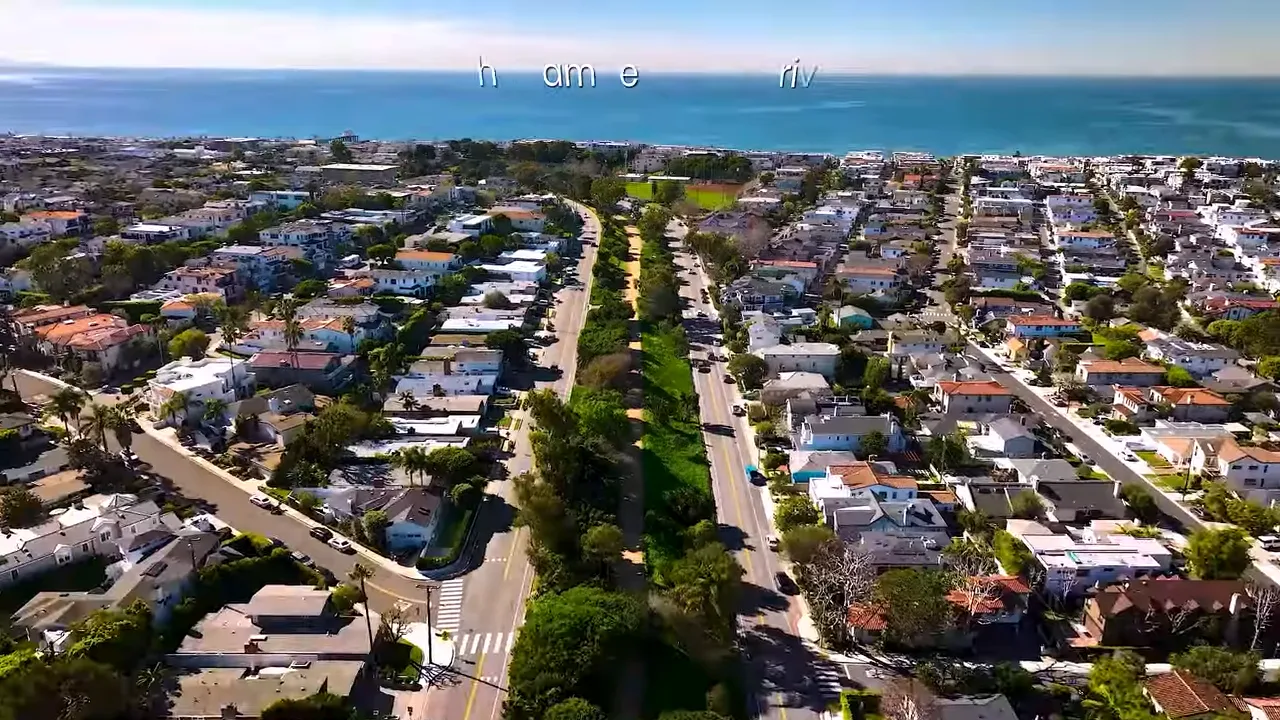
The attraction is obvious. Extraordinary weather. A coastline that is genuinely world class. In places like Manhattan Beach, Redondo Beach, Hermosa Beach, and parts of Palos Verdes, the day-to-day lifestyle can feel hard to beat anywhere in the country.
But a sunny long weekend tells us almost nothing about what daily life costs, how a commute feels in October, or how wildly values can shift from one pocket to the next. That is why moving to Los Angeles rewards people who do real homework, not just casual research.
DISCOVER THE BEST PLACES TO LIVE IN SOUTHERN CALIFORNIA
1. Moving to Los Angeles: LA Is Still a Car City
This one sounds obvious until we actually live it. Los Angeles is built around driving. Even if we are coming from another major metro, the adjustment can still be bigger than expected.
Average commute times are long, and transportation costs run well above the national average. More importantly, the car becomes part of how we organize life. Where we eat, where we shop, which activities make sense for the kids, and whether crossing a freeway is worth the hassle.

In the South Bay, the social scene is often built around activity and the outdoors. Think running, cycling, beach volleyball, paddle sports. If that suits us, terrific. If we want dense urban spontaneity where we walk everywhere and bump into people constantly, this is a different setup.
Best move: test the area on an ordinary weekday. Drive the routes we would actually use. Not on a Saturday in summer. On a Tuesday morning when life is normal.
2. Home Prices in Los Angeles Are Hyperlocal
One of the biggest mistakes people make when moving to Los Angeles is assuming city level research is enough. It is not. In the South Bay, prices can change dramatically within a few blocks.
Two homes can both be described as South Bay, look similar in size, and still sit worlds apart in value. One could be around entry level for the market, while the other is priced like a trophy location. Sometimes the difference is not miles. It is a handful of streets.
Median pricing across South Bay cities does not tell us much by itself. Manhattan Beach is in a completely different bracket from Torrance. Hermosa sits somewhere else again. And even within Manhattan Beach, one pocket can behave very differently from another.
This matters because a modest overpayment on a multimillion dollar home is not modest at all. A 5 percent mistake on a 2 million dollar purchase is 100,000 dollars gone.
Best move: research at street-level, not city level. Pocket knowledge matters here more than broad summaries.
3. Both Partners Must Be Ready for Moving to Los Angeles
This point gets ignored far too often, and it is one of the biggest reasons a relocation can fail.
Usually one partner has the opportunity, has done the research, and is eager to go. The other is supportive but still carrying concerns. Maybe it is family left behind. Maybe it is uncertainty about lifestyle. Maybe it is simple anxiety about cost. To avoid being the obstacle, they nod along.
Then the move happens. The concerns that felt manageable before the move suddenly grow teeth. Long commutes. Slower social integration. Higher everyday costs. If one person never truly bought in, the strain can show up quickly.
Best move:
- Do separate research
- Compare notes honestly
- Name concerns before the move, not after
- Make sure the decision is shared, not inherited
4. Los Angeles Property Taxes Explained
California property taxes catch a lot of newcomers off guard because of how Proposition 13 works in practice.
When we buy, our property tax assessment is based roughly on the purchase price, then rises on a limited annual basis until the home sells again. That sounds tidy enough until we realize the neighbor in an identical house may have bought years earlier and could be paying dramatically less.
So if we buy at current market value, we get taxed at current market value. In many parts of LA County, the effective rate ends up closer to the mid 1 percent range once local assessments are included.
On a $2 million home, that can mean roughly 23,000 to 25,000 dollars a year. That is not background noise. That is a major line item.
Best move: estimate property tax from our purchase price, not from the seller's current bill.
5. Homelessness in Los Angeles Is Street-Specific
Yes, Los Angeles has a visible homelessness problem. No, it is not evenly distributed.
Some parts of Greater Los Angeles experience it far more intensely than others. The day-to-day feel in parts of South Bay coastal communities can be very different from areas like Metro Central, parts of South LA, or other higher impact zones.
That means broad media narratives are not enough. They can distort reality in both directions. They can scare us away from a pocket that would suit us well, or lull us into assumptions about an area we have not properly checked.

Best move:
- Check the exact street on street view
- Visit at different times of day
- Research the specific pocket, not just the city name
6. Rancho Palos Verdes Landslide Risks
If we are considering the Peninsula, we need to understand this one properly.
Rancho Palos Verdes has an active landslide area tied to the Portuguese Bend complex, and the city has taken serious action, including a permanent ban on new residential construction in the designated landslide zone. This is not a tiny technical detail. It is a major due diligence issue.
Now, very important caveat: this does not mean all of Rancho Palos Verdes is affected. It absolutely is not. Nor does it mean Palos Verdes Estates or Rolling Hills Estates are caught in this specific issue.
But if we are moving to Los Angeles and buying on the Peninsula, the exact address must be checked against the published zone maps before we get emotionally attached to a property.
Best move: verify the exact parcel, not the neighborhood label.
7. Los Angeles School Boundaries Matter
Families moving to Los Angeles often focus on districts, which makes sense. The South Bay has some truly excellent public schools.
The catch is that school boundaries can be drawn at street-level. Two homes that look interchangeable may feed into different schools entirely.
That matters because some buyers assume a property belongs to a certain school cluster, fall in love with it, then discover during due diligence that it does not. If the move is being driven by education, that can be a deal breaker.
And if we get this wrong, the fallback may be private school fees that run into the tens of thousands per child per year.
Best move: confirm school assignment by exact address before getting attached to a listing.
8. California Taxes and Your Budget
For households coming from places like Texas, Florida, or other lower tax states, this can feel like a punch in the face.
California state income tax is substantial, especially for dual-income professional households. Add federal taxes, and the gap between gross income and real spendable income becomes impossible to ignore.
There is also sales tax. In LA, it is already high, and in some places it climbs higher once local additions are layered in. That is the sort of thing we feel every month, not just at tax time.
Best move: budget from net income after tax, not from gross salary. That single change gives a far more honest picture of affordability when moving to Los Angeles.
9. Los Angeles Traffic Reality
Everyone knows LA traffic is bad. Nearly everyone underestimates what that means in practice.
The issue is not only how far the office is from home. It is direction of travel, freeway choice, congestion windows, school drop off, after school activities, and which side of the 405 or 110 we end up living on.
Two addresses that look similar on paper can produce very different daily routines. Twelve miles in LA can absolutely turn into a grind.
Best move: check the real commute from the actual address at 8:00 a.m. on a weekday using live traffic data. Not a generic map estimate. The real thing.
10. Home Insurance Costs in Los Angeles
Insurance in Southern California has become far more serious than many buyers realize, especially for hillside, canyon, or fire-exposed properties.
In flatter coastal pockets of the South Bay, increases may be manageable compared with places like Malibu or higher risk hillside zones. But even then, we should never assume the number.
Some buyers get deep into escrow and then discover that insurance is double or triple what they expected. On a high-value property, that can mean thousands more every year, or over a thousand dollars more every month than planned.
Best move:
- Get quotes before offering
- Get three quotes, not one
- Pay special attention to hillside and Peninsula properties
11. Cost of Living in Los Angeles
If there is one reality that sits above all the others when moving to Los Angeles, it is this: the budget almost always needs to be rewritten.
Housing is the obvious part. But it is not only housing. Transportation runs higher. Groceries run higher. Everyday goods and services run higher. Utilities can be higher. Taxes are higher. Insurance can be much higher. Property tax resets at the new purchase price. It all stacks.
This is where families can get into trouble. They model the mortgage, feel good about qualification, and assume the rest of life stays roughly the same. It does not.
A family that lived comfortably elsewhere on a certain income can move here and suddenly feel stretched, even if nothing looks outrageous on its own. The danger is death by a thousand line items.
Best move: build a real relocation budget before touring homes. Include:
- Mortgage
- Property tax based on purchase price
- Insurance based on actual quotes
- State income tax
- Transportation
- Groceries
- Utilities
- School costs if relevant
12. Is Moving to Los Angeles Right for You?
This might be the most important truth of all. Moving to Los Angeles is not really about whether the city is good or bad. It is about whether the specific lifestyle on offer fits the way we actually live.
If we love coastal living, outdoor activity, mild weather, and we can comfortably afford the tradeoffs, the South Bay can be phenomenal. Truly phenomenal. For many people, it is one of the best lifestyle moves they will ever make.
If we want a more walkable urban rhythm, lower fixed costs, simpler taxes, easier logistics, and less financial pressure, then the same move can feel heavy very quickly.
That is why moving to Los Angeles works best when we are brutally honest about who we are, what we need, and what we are willing to trade for the lifestyle.
The people who do well here are not the ones chasing the fantasy version. They are the ones who understand the real version and still say yes.
DISCOVER THE BEST PLACES TO LIVE IN SOUTHERN CALIFORNIA
FAQs About Moving to Los Angeles
Is moving to Los Angeles worth it for families?
It can be, especially in the South Bay if we value beach access, outdoor living, and strong schools in the right pockets. But it only works well when we budget carefully, verify school assignments by address, and make sure the commute is livable.
What is the biggest surprise when moving to Los Angeles?
Usually it is not one single thing. It is how all the costs stack together. Housing, taxes, transportation, insurance, and daily spending all run higher than many households expect.
How much should we budget for property taxes in Los Angeles?
We should estimate from the price we plan to pay, not from the current owner's tax bill. In many LA County areas, the effective rate often lands above 1.1 percent once local assessments are included.
Is South Bay better than other parts of Los Angeles for relocation?
For many households, yes. The coastline, weather, and lifestyle are excellent. But South Bay is not automatically the best fit for everyone. If we want a more urban, walkable, transit based setup, we may prefer a different part of the region.
What should we research before moving to Los Angeles?
At minimum, we should research the exact address for commute, school assignment, tax impact, insurance cost, and neighborhood feel at different times of day. General city level research is not enough here.
Final Thoughts on Moving to Los Angeles
Moving to Los Angeles can be an outstanding decision. It can also be an expensive mismatch. The difference usually comes down to preparation.
If we understand the costs, the pockets, the school boundaries, the commute patterns, and the lifestyle honestly, we give ourselves a real chance to enjoy what this place does better than almost anywhere else.
If you’re considering buying a home in the South Bay or Los Angeles, I’d love to help you pressure-test neighborhoods, pricing, and affordability before you fall in love with a listing. Call or text me at 323-350-5770, or book a FREE consultation here to map out next steps.
READ MORE: Los Angeles Real Estate Market: Warning Signs Every Home Buyer Should Watch