
If you are moving to Los Angeles, the biggest mistake you can make is assuming it works like every other American city.
Most people arrive with a picture in their head built from films, headlines, traffic jokes, and other people's opinions. Then they get here and realise Los Angeles is not just different. It is structurally different. It is a city of contradictions that somehow all hold true at once.
It feels sprawling, yet it is the densest urbanized area in the country. It is famously car dependent, yet full of highly walkable local pockets. It is a global powerhouse, yet much of daily life happens far away from downtown. And if you are serious about moving to Los Angeles, understanding those contradictions gives you a much clearer sense of where you will actually fit.
Table of Contents
- Why Moving to Los Angeles Is Different From Any Other U.S. City
- Feature #1: Los Angeles Is America's Densest Urban Area
- Feature #2: Los Angeles Has Multiple City Centers
- Feature #3: Santa Ana Winds and LA's Unique Climate
- Feature #4: Los Angeles Is One of America's Most Diverse Cities
- Feature #5: Los Angeles Has More Museums Than Any U.S. City
- Feature #6: Why Driving Is Different in Los Angeles
- Feature #7: How the 2026–2028 Global Events Will Impact Los Angeles
- Feature #8: Los Angeles Has Multiple Microclimates
- FAQs About Moving to Los Angeles
- Final Thoughts on Moving to Los Angeles
Why Moving to Los Angeles Is Different From Any Other U.S. City
Los Angeles breaks a lot of the rules people use to understand American cities.
In most major metros, you can point to a dominant downtown, a clear commuter pattern, a familiar density curve, and one general idea of what local life looks like. LA is not built that way. It is shaped by geography, climate, migration, infrastructure, and history in a way that creates a city with multiple centres, multiple climates, and multiple versions of daily life all operating at the same time.
That is why moving to Los Angeles is less about choosing a city and more about choosing a very specific slice of it.
Here are eight features that make Los Angeles unlike anywhere else in America.
DISCOVER THE BEST PLACES TO LIVE IN SOUTHERN CALIFORNIA
Feature #1: Los Angeles Is America's Densest Urban Area
Everyone calls Los Angeles the ultimate sprawl city. Endless roads, freeways in every direction, neighbourhoods stretching forever. Fair enough. On the surface, that is exactly how it looks.
But the data turns that assumption upside down. Los Angeles is actually the densest urbanized area in the United States. The urbanized area sits at more than 7,000 people per square mile, which is higher than New York's urbanized area.
So why does New York feel denser?
Because New York's density is concentrated vertically. One tower can hold hundreds of flats in one spot. Los Angeles spreads that density horizontally across a huge region. There are fewer dramatic spikes, but the density is everywhere.
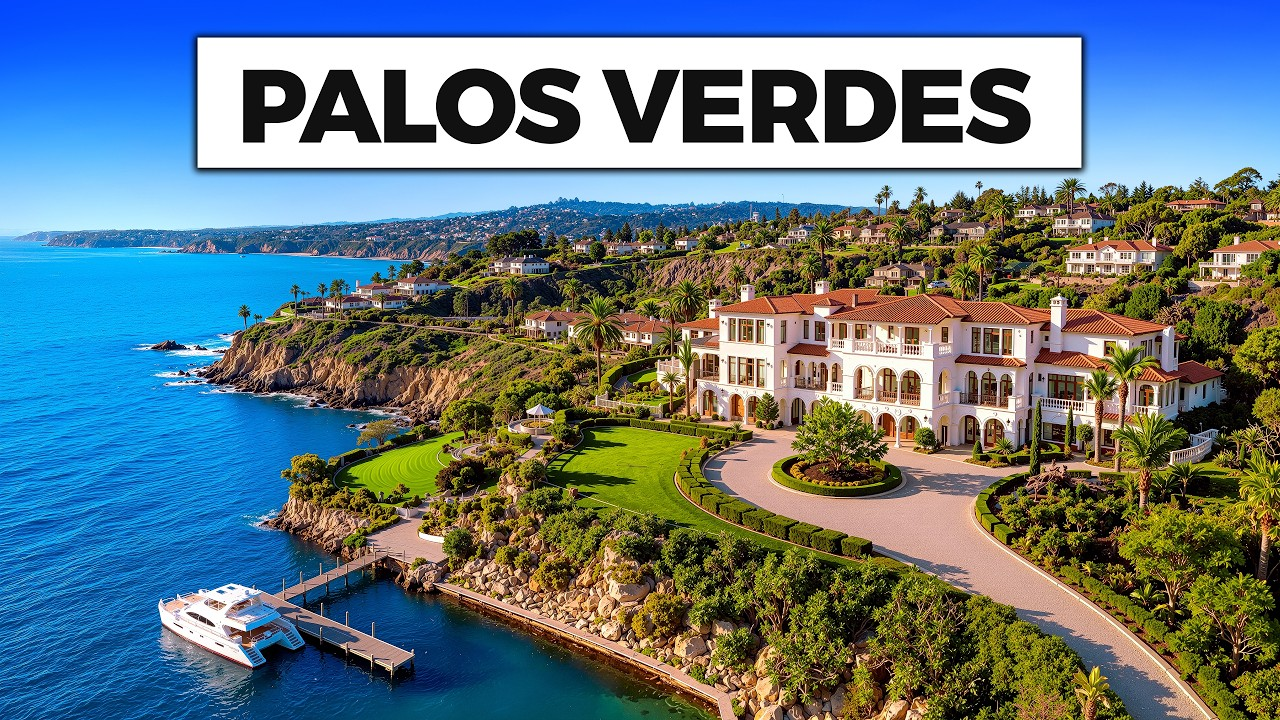
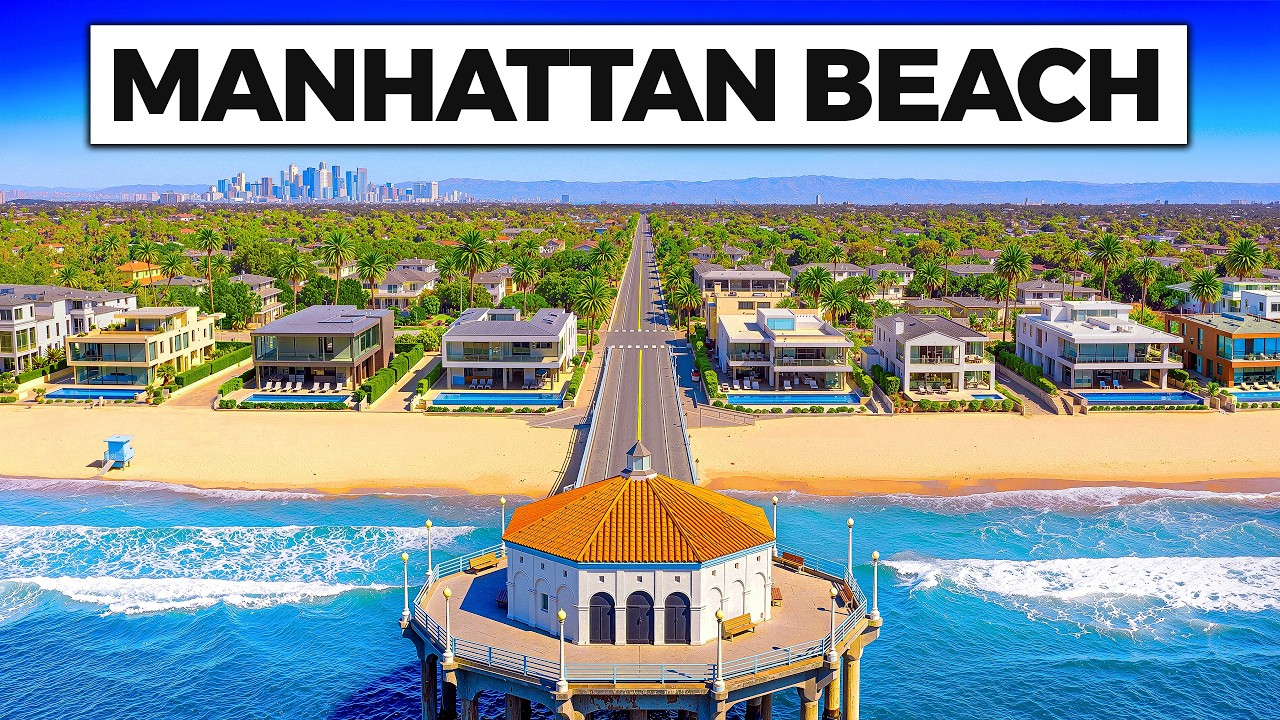
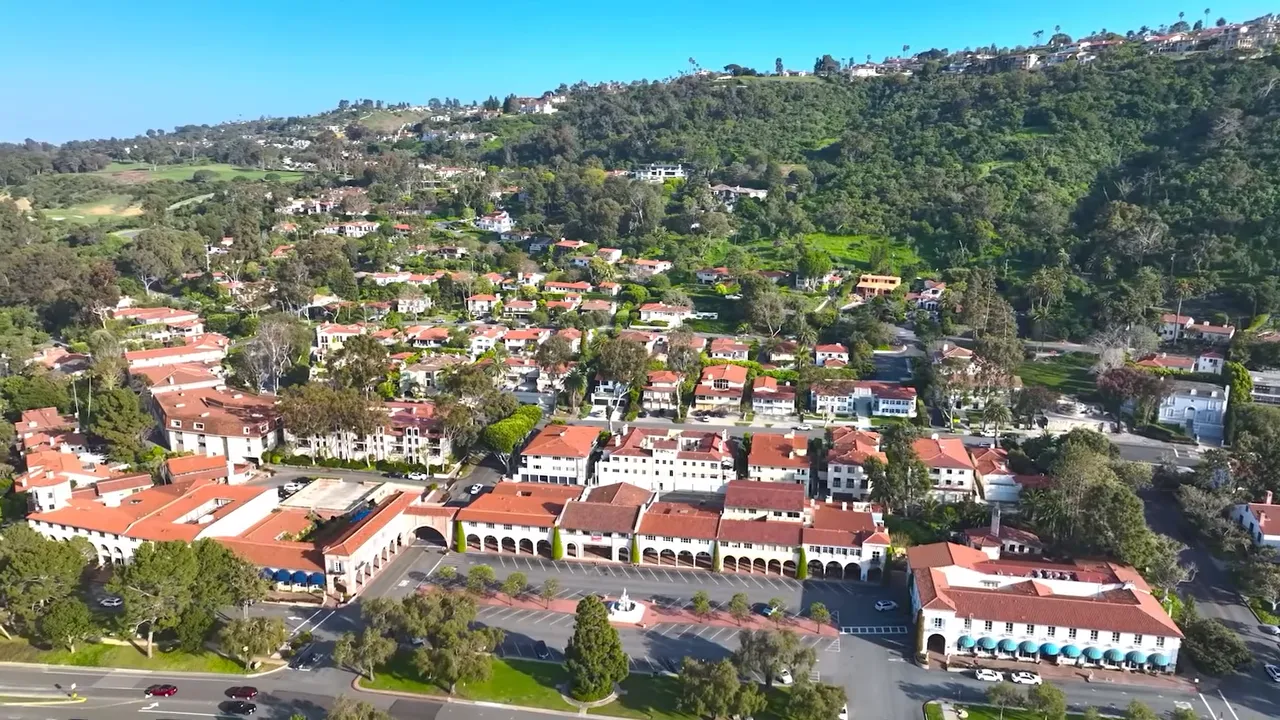
That matters a great deal if you are moving to Los Angeles. Places that people from other states might dismiss as suburban are often not suburban in the way they imagine. Manhattan Beach, Hermosa Beach, and Rancho Palos Verdes are not isolated emptiness. They are active communities with strong local identity, real demand, and in many cases genuinely walkable daily life.
This is one of the reasons LA real estate behaves differently from what newcomers expect. Demand is not funnelled into one tiny urban core. It is spread across a large and varied region.
Feature #2: Los Angeles Has Multiple City Centers
Most American cities revolve around downtown. Chicago has the Loop. New York has Midtown. Houston has its central business district.
Los Angeles broke that pattern a century ago.
Back in the 1920s, major employment, shopping, and cultural hubs were already taking shape outside traditional downtown. Hollywood developed into the entertainment centre. Mid-Wilshire became a major commercial corridor. The Westside built its own economic identity. In other words, LA became America's first truly polycentric big city.
That means no single core dominates everyday life for most people. In fact, most residents have very little to do with downtown in their daily routine unless they work there.
For anyone moving to Los Angeles, this changes the housing search completely. You do not need to live near downtown to feel connected to jobs, restaurants, culture, or community. Places like Torrance, Long Beach, Manhattan Beach, and Hermosa all function as complete environments in their own right.
That is not a compromise. That is how Los Angeles works when it is working properly.
Feature #3: Santa Ana Winds and LA's Unique Climate
If you are moving to Los Angeles, there is a weather system you need to understand long before you buy a house, and it is not earthquakes.
It is the Santa Ana winds.
These winds usually show up between September and May. They begin when cold dense air builds over the high desert plateaus of Nevada and Utah, then rushes west through mountain passes. As that air drops in elevation, it heats up and dries out.
The result can be gusts around 70 miles an hour, humidity near zero, and sudden spikes in temperature. Once vegetation is dry enough, one ember can become a serious fire in no time.

This is not just an interesting local fact. It directly affects two practical parts of homeownership.
- Insurance costs can rise significantly in higher risk areas.
- Location choice becomes more important because coastal areas benefit from marine influence in ways inland areas do not.
The South Bay's coastal communities often have a genuine geographic advantage here. They are moderated by the ocean and usually avoid the worst inland heat build up.
When people talk about moving to Los Angeles, this is exactly the sort of thing they tend to miss. Geography is not background scenery here. It shapes cost, comfort, and risk.
Feature #4: Los Angeles Is One of America's Most Diverse Cities
People know Los Angeles is diverse. What many do not grasp is the scale of it.
Los Angeles is home to people from more than 140 countries speaking 224 languages. Even more striking, no single racial or ethnic group forms a majority population. That is not branding. That is the city as it actually is.
Roughly 60 percent of people in Los Angeles speak a language other than English. The city formally recognises a long list of cultural communities including Chinatown, Filipinotown, Koreatown, Little Armenia, Little Ethiopia, Little Tokyo, and Thai Town.
This changes daily life in ways that matter. Food, schools, places of worship, local businesses, community events, markets, and social networks all reflect a city that has absorbed the world.
If you are moving to Los Angeles, you are not entering one cultural scene. You are stepping into dozens of them, often within easy reach of one another.
That is one of LA's greatest strengths, and frankly, no other American city matches that exact blend of linguistic and cultural breadth in quite the same way.
Feature #5: Los Angeles Has More Museums Than Any U.S. City
Here is one that catches people off guard every time. Los Angeles has more museums than any other city in America.
Greater Los Angeles has more than 800 museums. Not New York. Not Chicago. Los Angeles.
LACMA alone is the largest art museum in the western United States, with a collection of more than 140,000 objects. And the city is still expanding its cultural footprint. The Lucas Museum of Narrative Art is scheduled to open in Exposition Park in September 2026.
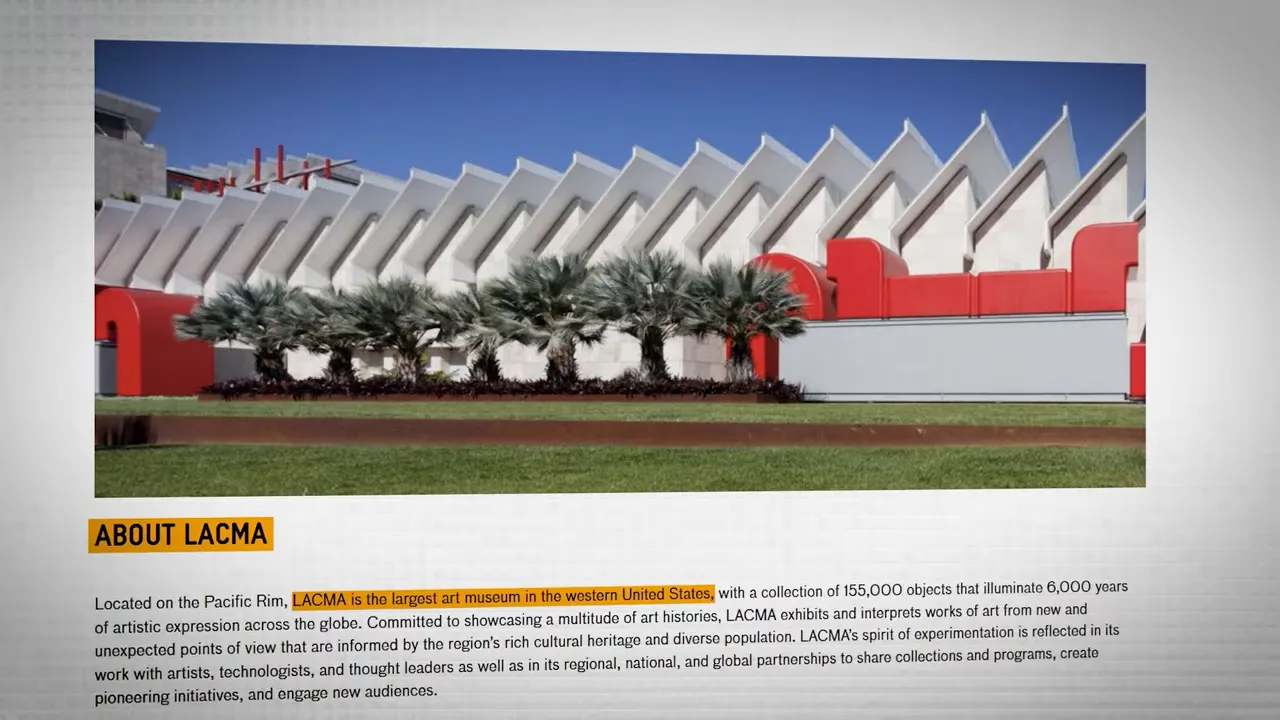
That matters because LA still gets lumped into the lazy stereotype of being shallow or image obsessed. That is miles off the mark. The cultural depth here is enormous. Before the pandemic, the city hosted more than 1,500 theatrical productions a year. Add that to the museums, the galleries, and the expanding institutional investment, and you get a city that is becoming one of the great museum centres in the world.
For anyone moving to Los Angeles, culture is not a side perk. It is part of the city's DNA.
Feature #6: Why Driving Is Different in Los Angeles
Los Angeles did not just embrace the car. It helped invent the car dependent model that shaped modern America.
By 1925, Los Angeles already had one car for every three residents, about double the national average at the time. The car culture was established before the full freeway system even arrived.
Then came the Arroyo Seco Parkway, widely cited as the first modern freeway in the United States. From there, the template spread everywhere.
Today LA County has about 650 miles of freeway, and roughly two thirds of urban space is devoted to transportation infrastructure. Every day, more than 221 million vehicle miles are driven in the county.
And yet, this is where LA gets fascinating. The city is both dense and car oriented. Both are true at once. That is why coastal communities can feel local and walkable while still being tied into a giant regional network.
If you are moving to Los Angeles, do not think in terms of city versus suburb the way you might in another metro. In LA, you can live in a place with a neighbourhood feel and still have direct regional access by car.
Feature #7: How the 2026–2028 Global Events Will Impact Los Angeles
Los Angeles is on track to become the first American city ever to host the Summer Olympics three times.
The 2028 games open on July 14, 2028, and even the opening ceremony plan is unusual. It is set to take place across two venues at the same time, the Los Angeles Memorial Coliseum and SoFi Stadium.
But the bigger story is not the spectacle. It is the investment.
One study projected an $11 billion economic impact and around 79,000 full time jobs. Federal funding has already been approved, including mobility related transit support. LA Metro's 2028 by 28 initiative is extending lines and accelerating projects tied to the games.
And it is not just the Olympics. Los Angeles is also hosting the 2026 FIFA World Cup and the 2027 Super Bowl. That is three massive global events in a three year span.
If you are moving to Los Angeles and thinking about buying in the next couple of years, this matters. Major events bring infrastructure upgrades, attention, jobs, and pressure on housing and transport systems. Cities do not go through that level of global focus without changing.
Feature #8: Los Angeles Has Multiple Microclimates
This last one is probably the most remarkable of the lot.
Los Angeles runs from sea level at the Pacific all the way up to 5,074 feet within city limits.
That means you can be at the beach in the morning, climb into serious mountain terrain later in the day, and still be back by the water for dinner without leaving the city boundary.
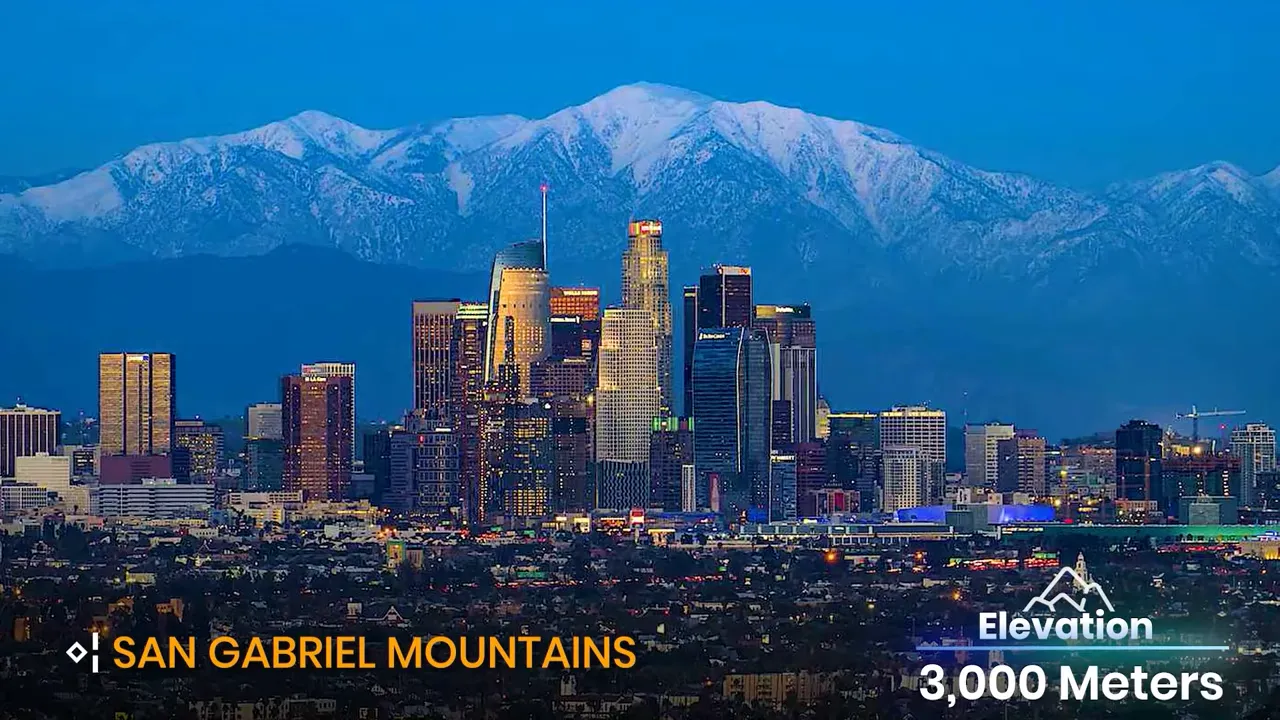
The result is not one climate but several. On the same day, coastal areas may sit around 72 degrees under a marine layer while locations 25 miles inland push into the mid 90s.
That topographic range is extreme by the standards of major cities. The San Gabriel Mountains rise abruptly north of the basin and create one of the most dramatic elevation gradients anywhere near a large urban area.
For the South Bay, this is a genuine lifestyle advantage. Coastal communities sit on the moderated edge of that system, cooled by the Pacific and insulated from the inland temperature spikes.
That is why moving to Los Angeles is never just about square footage or school districts or commute times. It is also about choosing a microclimate, a topographic setting, and a daily rhythm.
New York is not this. Chicago is not this. Houston is not this. Phoenix is not this. Los Angeles has an ocean, a basin, and mountains all packed into one urban reality.
EXPLORE BEST PLACES TO RETIRE IN SOUTHERN CALIFORNIA
FAQs About Moving to Los Angeles
Is moving to Los Angeles worth it if I do not want to live near downtown?
Yes. One of the defining features of Los Angeles is that it is polycentric. Many people live full lives in places like the South Bay, Long Beach, or the Westside with little need to centre their routine around downtown.
Why does Los Angeles feel spread out if it is so dense?
Because the density is distributed horizontally rather than stacked vertically in one dominant core. Instead of Manhattan style towers, LA spreads population across a huge area, so the density is real but less visually obvious.
What should I know about climate before moving to Los Angeles?
Los Angeles has multiple microclimates. Coastal neighbourhoods are often cooler because of the marine layer, while inland areas can be dramatically hotter on the same day. Santa Ana winds also affect wildfire risk, insurance, and comfort.
Is Los Angeles only for car dependent living?
No, but the car is still a major part of regional life. The interesting thing about LA is that some neighbourhoods are quite walkable locally while still relying on the freeway network for broader access across the region.
Does cultural diversity really affect daily life in Los Angeles?
Absolutely. The city's diversity shapes food, schools, local business districts, festivals, languages spoken, and community life. It is one of the biggest reasons people find LA more interesting than they expected.
What is the biggest takeaway for someone moving to Los Angeles?
Get the location right. Los Angeles is not one thing. It is a collection of very different communities, climates, densities, and lifestyles. The better you understand that before you move, the better your experience will be.
Final Thoughts on Moving to Los Angeles
That is the real story of Los Angeles. Not the lazy clichés. Not the film set version. Not the one note headlines.
It is a city of paradoxes, and those paradoxes are exactly what make it brilliant.
If you are moving to Los Angeles, do yourself a favour and stop asking whether LA is good or bad in the abstract. That is the wrong question. Ask which part of LA matches your budget, your routine, your tolerance for driving, your climate preference, and the kind of daily life you actually want.
Because in Los Angeles, choosing the right location makes all the difference.
If you’re moving to Los Angeles and want help translating these differences into real neighborhood options, I can help you narrow down the best fit based on your budget, lifestyle, and commute reality. Reach out and we’ll talk through what to watch for—like LA’s polycentric layout, microclimates, and the practical impact on day-to-day life.
Call or text me at 323-350-5770, or book a FREE consultation here and I’ll guide you from “I think I understand LA” to “I know exactly where I fit.”
READ MORE: Moving to Los Angeles: Things You Need to Know First